T
Security technicians
Arrive prepared. Install accurately. Close the loop.
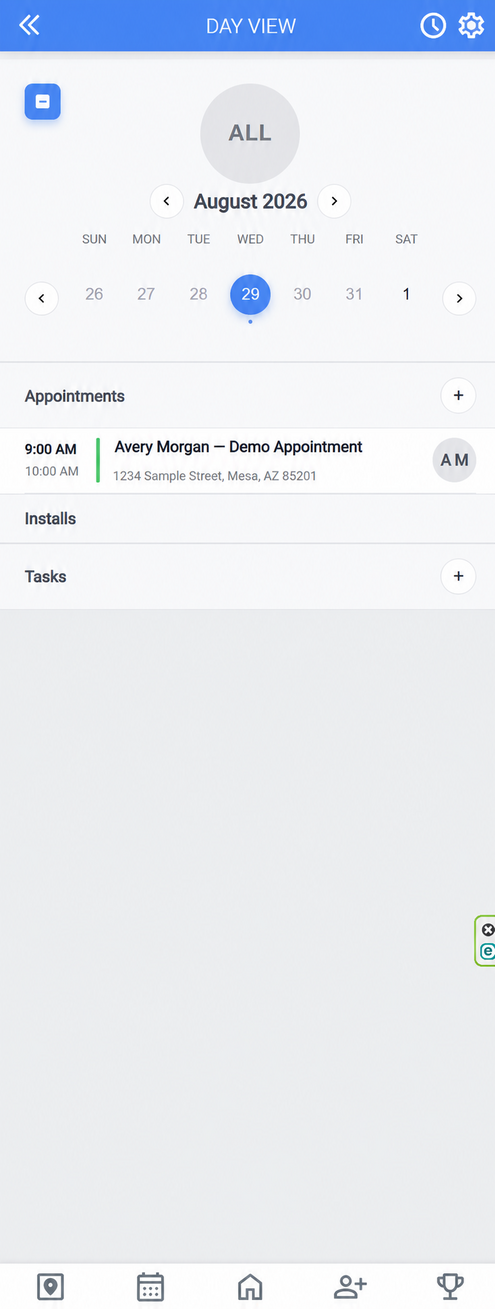
Technicians can see schedules, customer details, monitoring information, equipment and zones before the job. In the field they can manage inventory, register cellular communicators, run signal tests, place accounts on test, review event history, upload documents and record installation details.
- Mobile job schedule and customer history
- Equipment, zones and inventory visibility
- Signal testing and monitoring workflows
- Photos, documents and completion records
- Service cases and technician communications
R
Sales reps
Turn activity into cleaner sales and better follow-through.
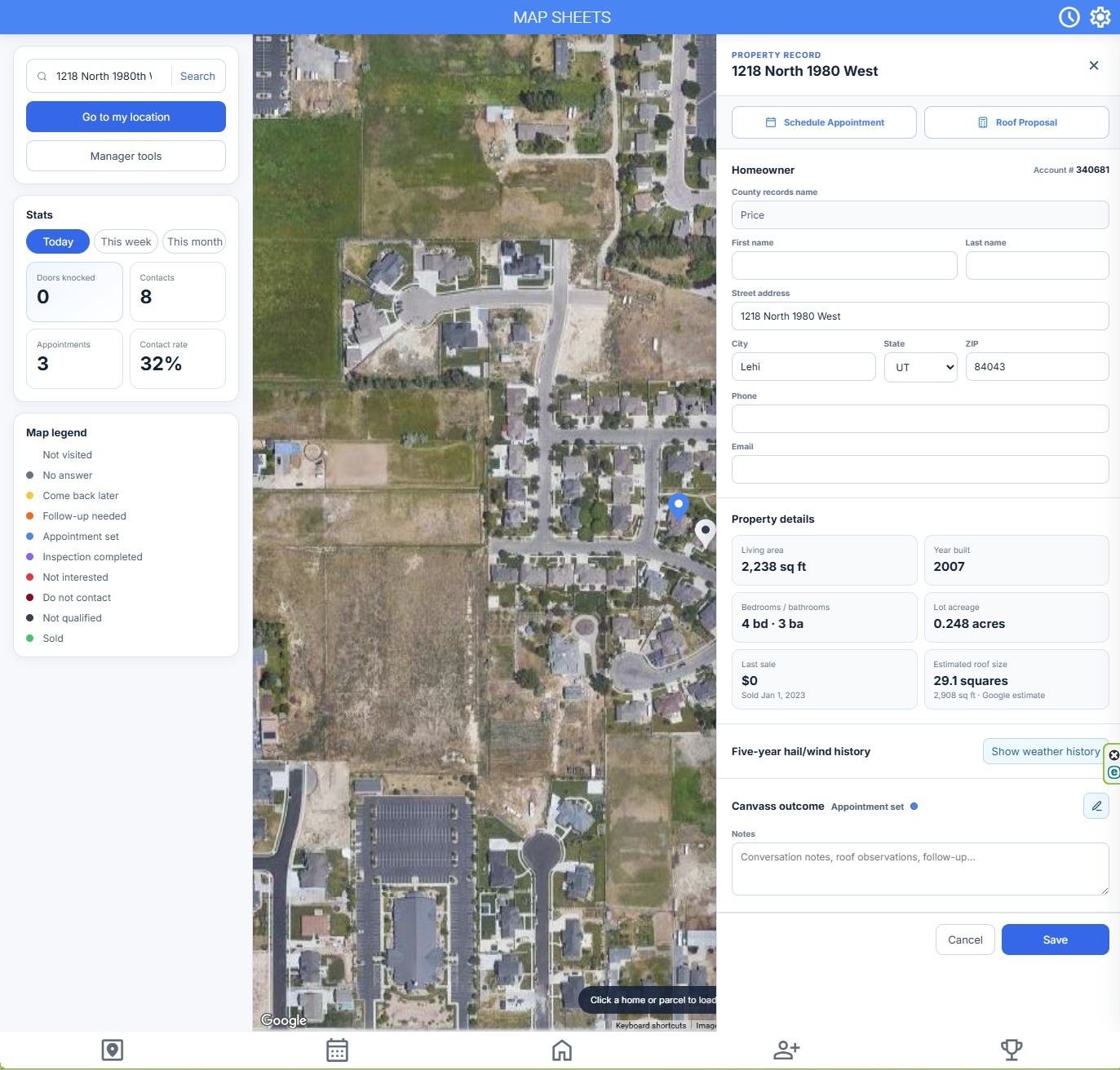
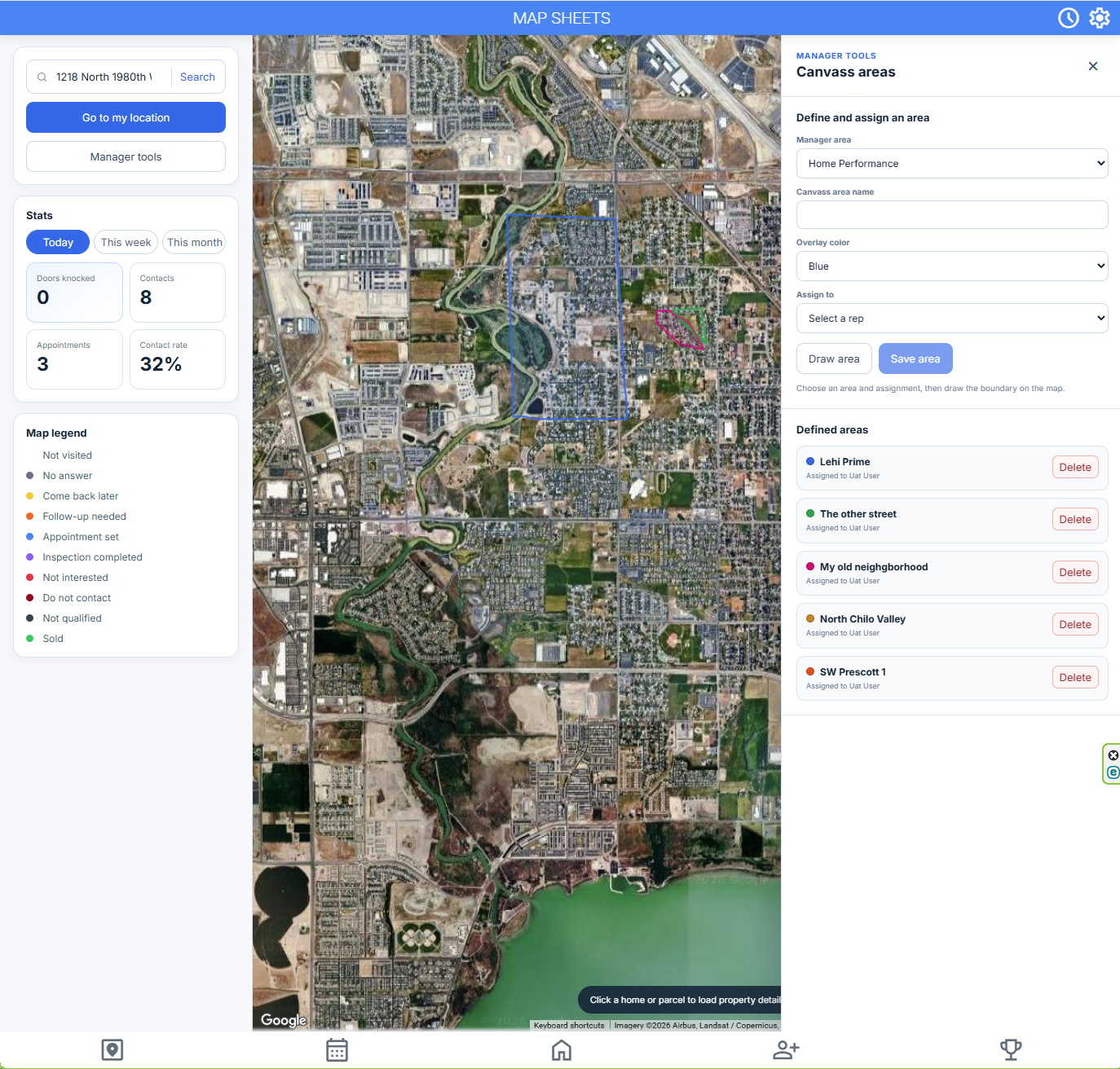
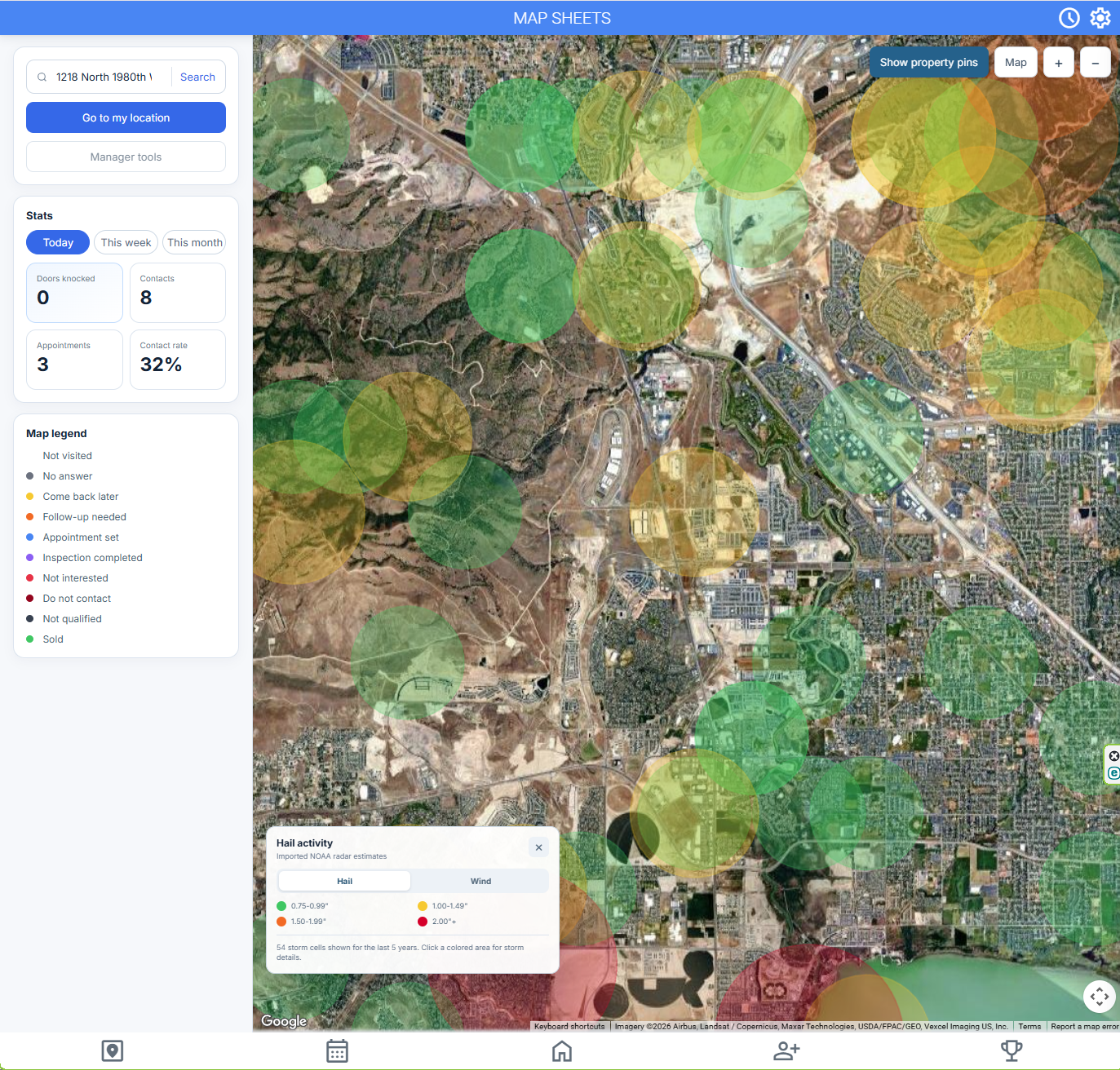
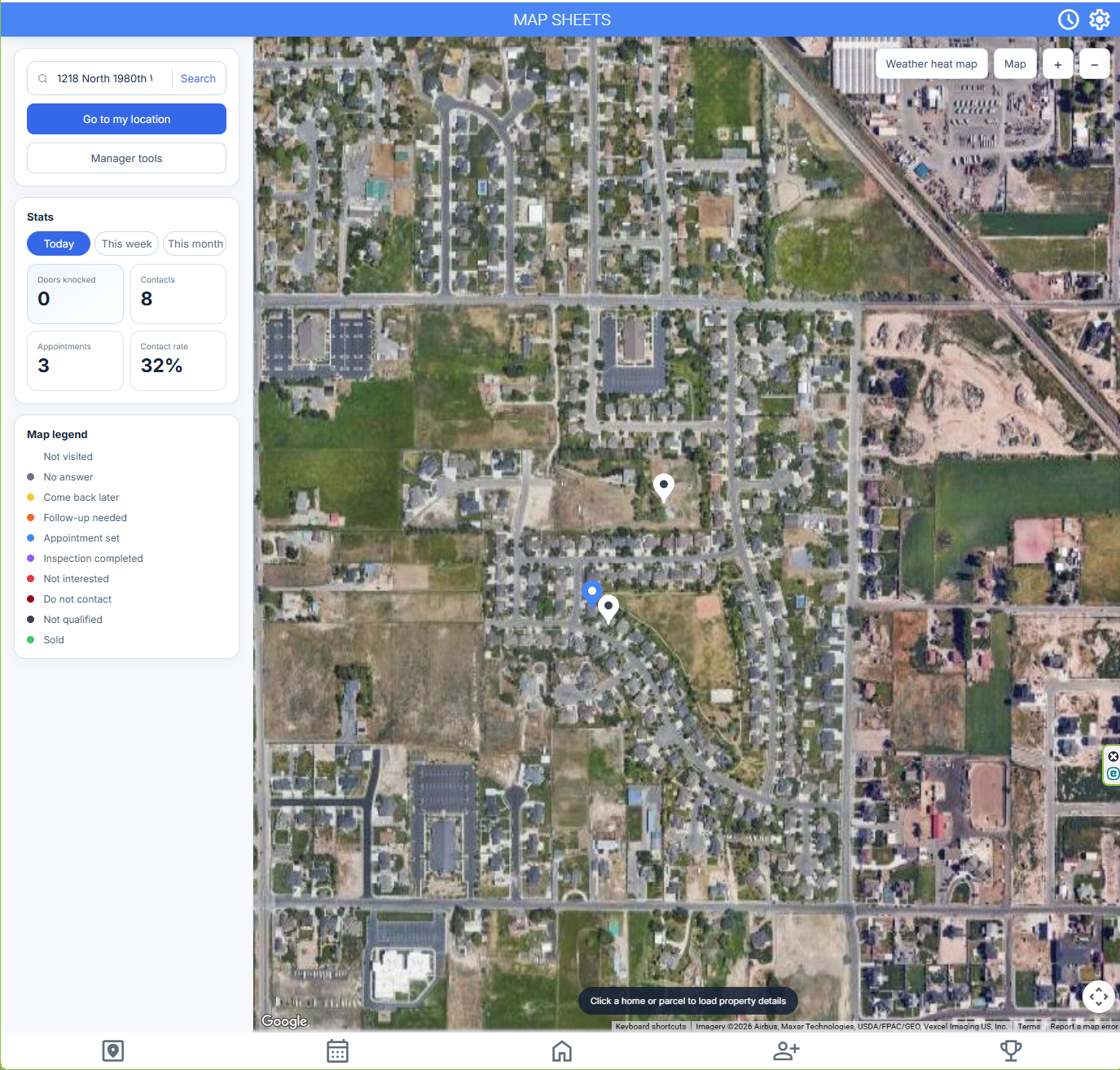
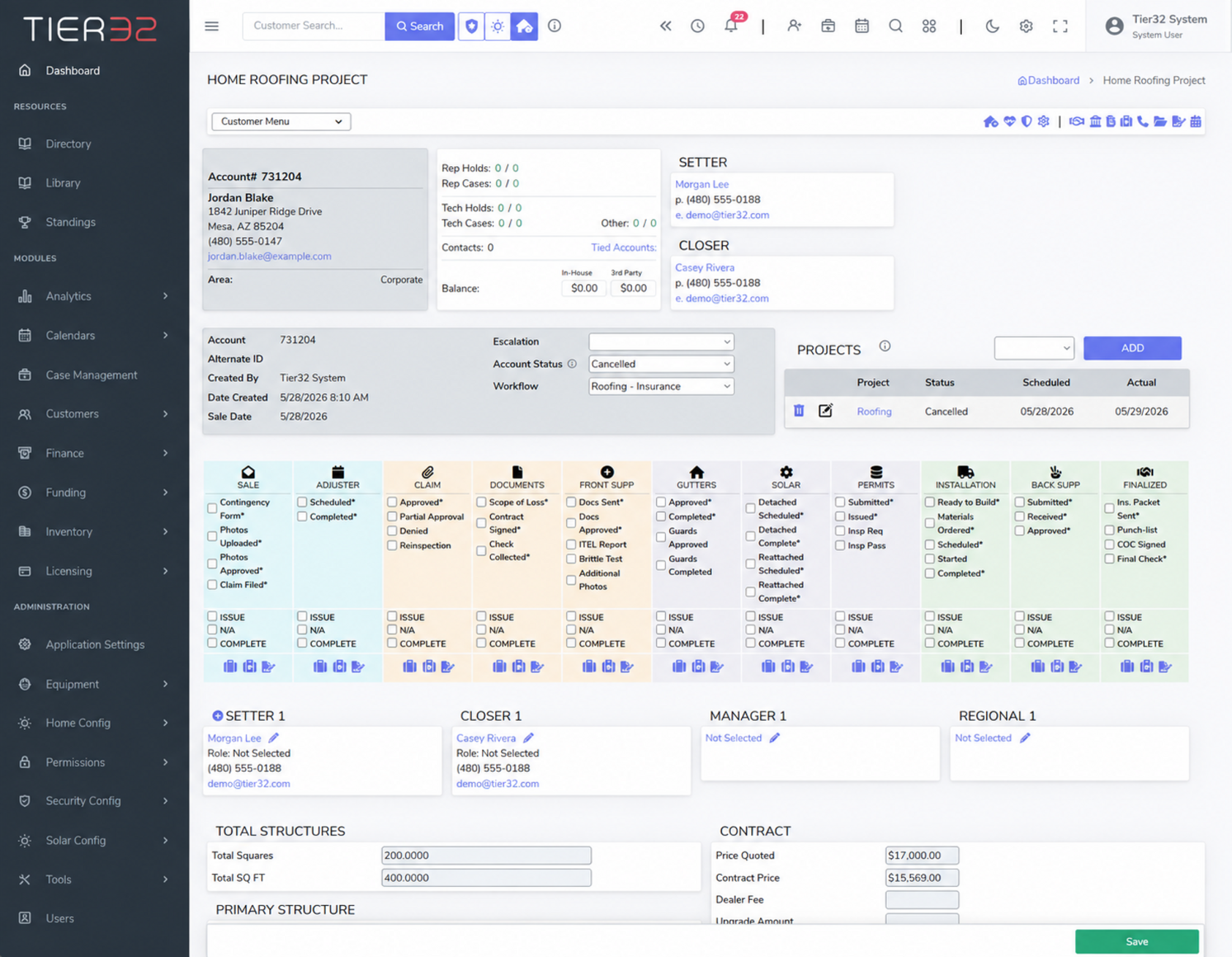
Reps can manage canvassing and leads, capture GPS addresses, look up homeowner data, track appointments, run credit, configure packages, generate e-contracts and follow every account after the sale.
- Lead, map and canvassing tools
- Setter-to-closer handoffs and alerts
- Guided account setup and digital authorization
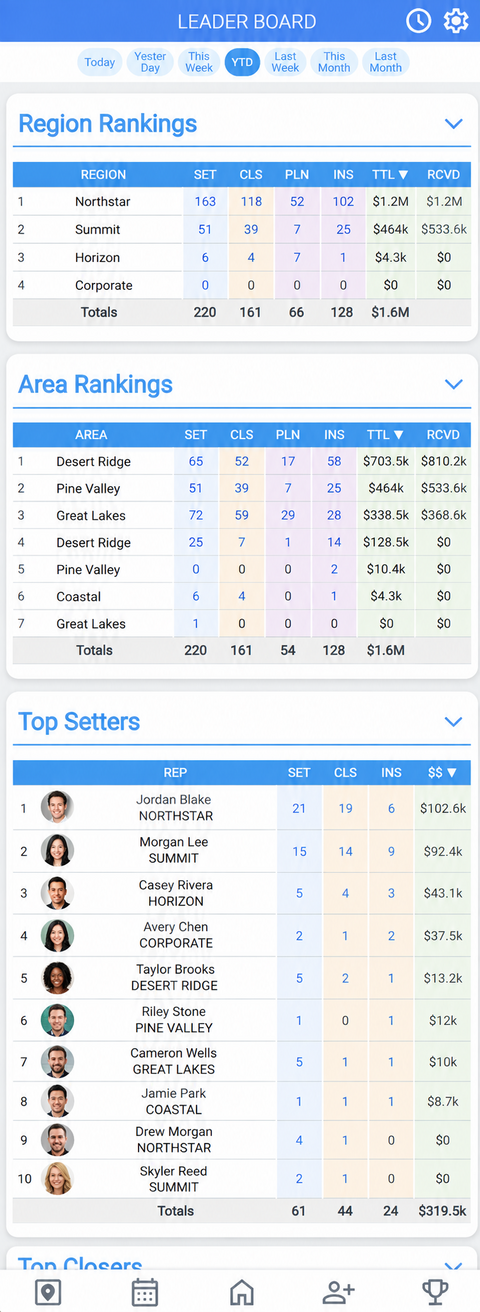
- Personal stats, rankings and account status
- Commission, hold and pay visibility
O
Owners and leaders
Know what is happening—before it becomes a problem.
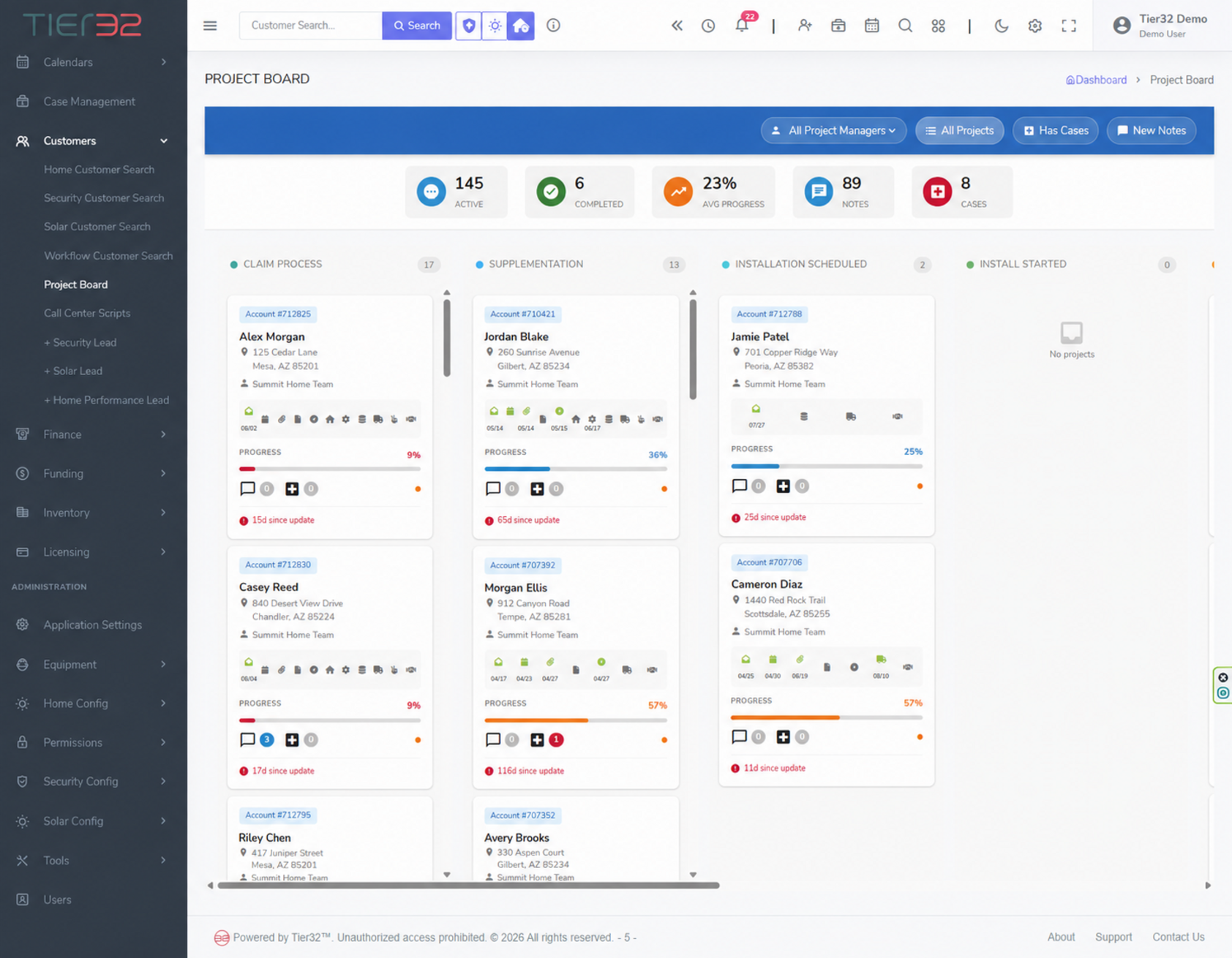
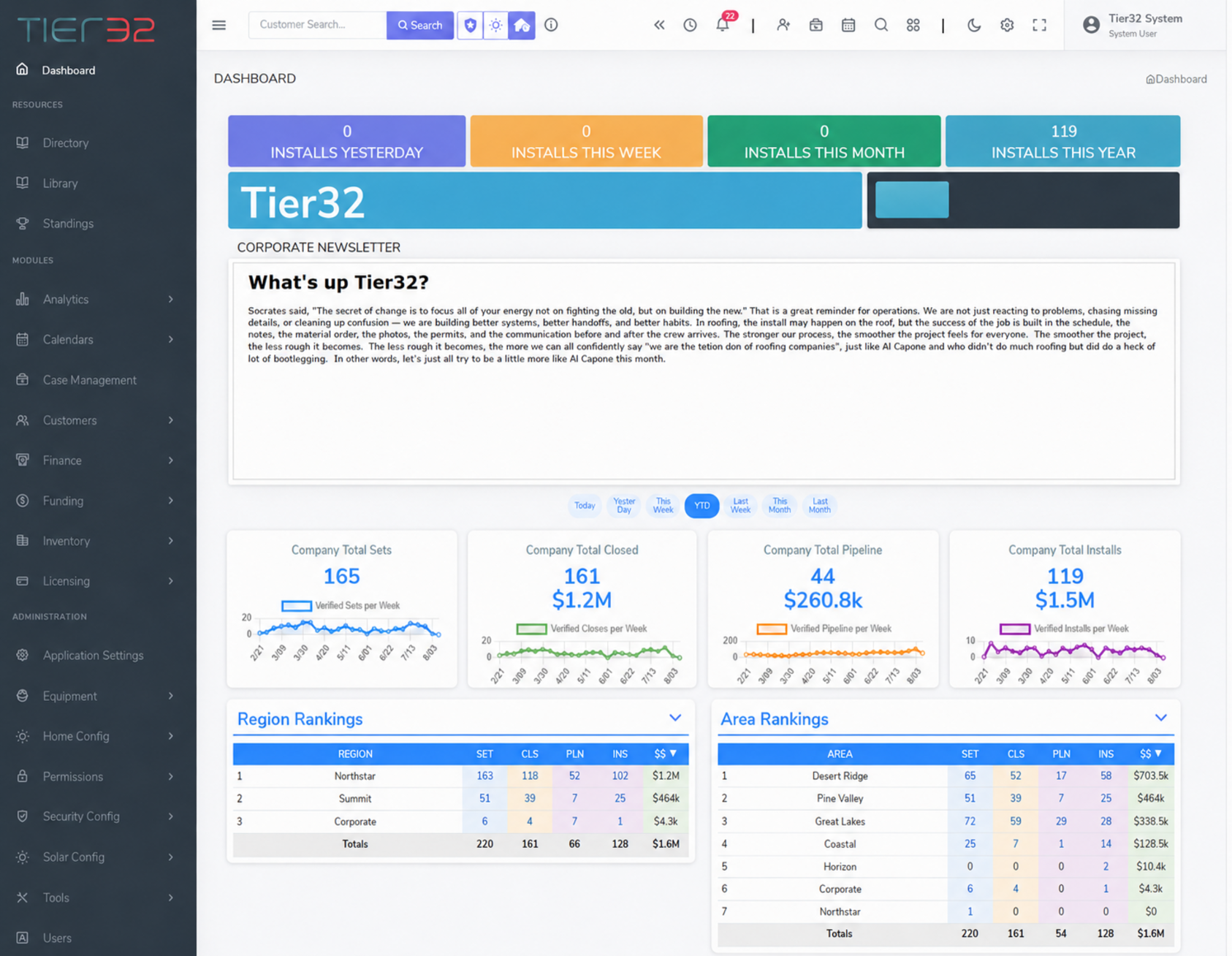
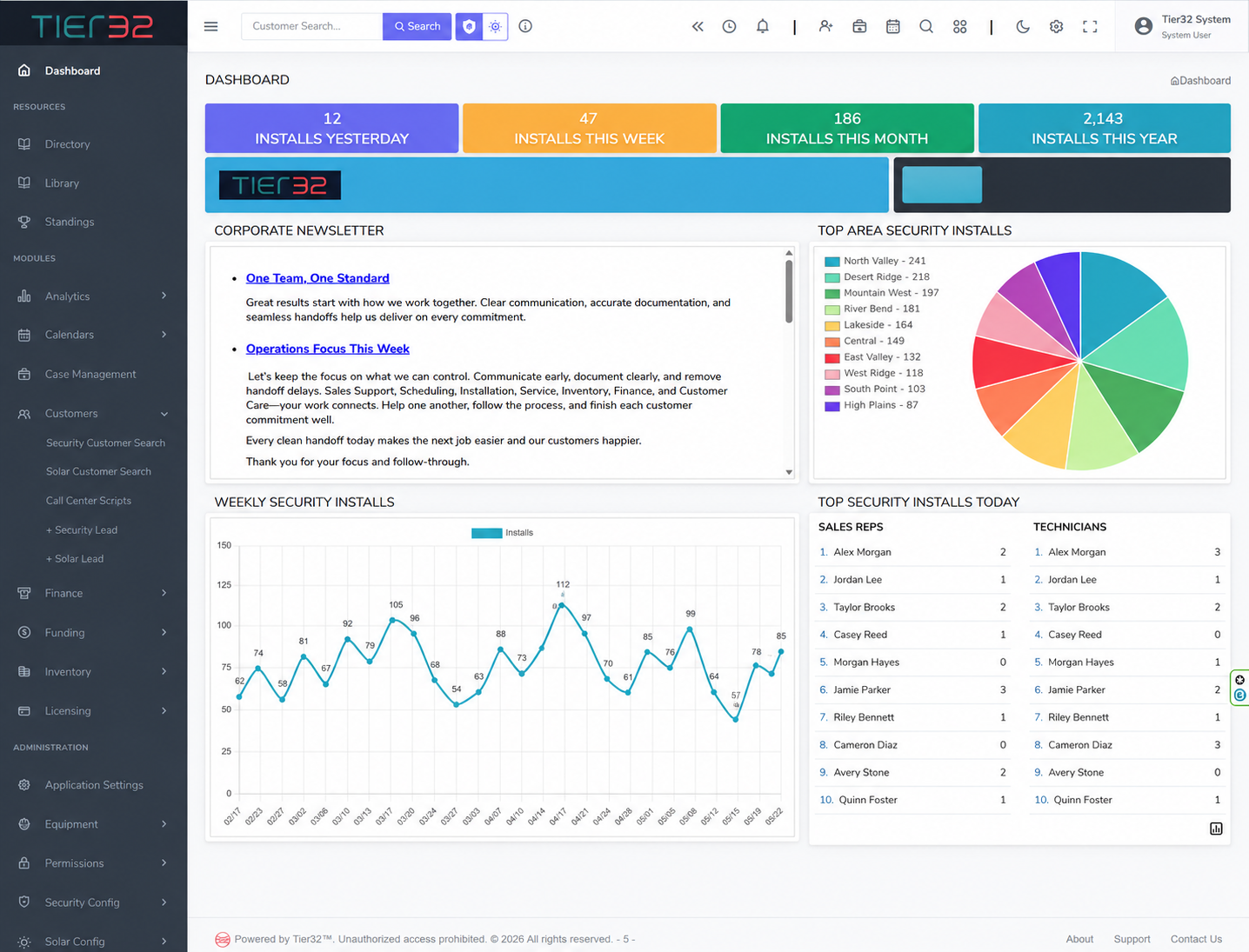
Dashboards, saved searches, custom reports and historical scorecards expose production, cancellations, aging, funding efficiency, pipeline movement, user activity and team performance.
- Real-time company and area statistics
- Custom reports, filters and exports
- Funding and operational scorecards
- Trend, exception and bottleneck visibility
- Permission-based access and audit history
B
Back-office teams
Work from shared data instead of disconnected spreadsheets.
Operations, finance, funding, HR and customer service share the same customer and employee record—with specialized modules for the work each department performs.
- Inventory, suppliers and warehouses
- A/R, payments, subscriptions and aging
- Commission rules and payroll calculations
- Funding audits and document tracking
- HR, licensing, cases and customer contact logs